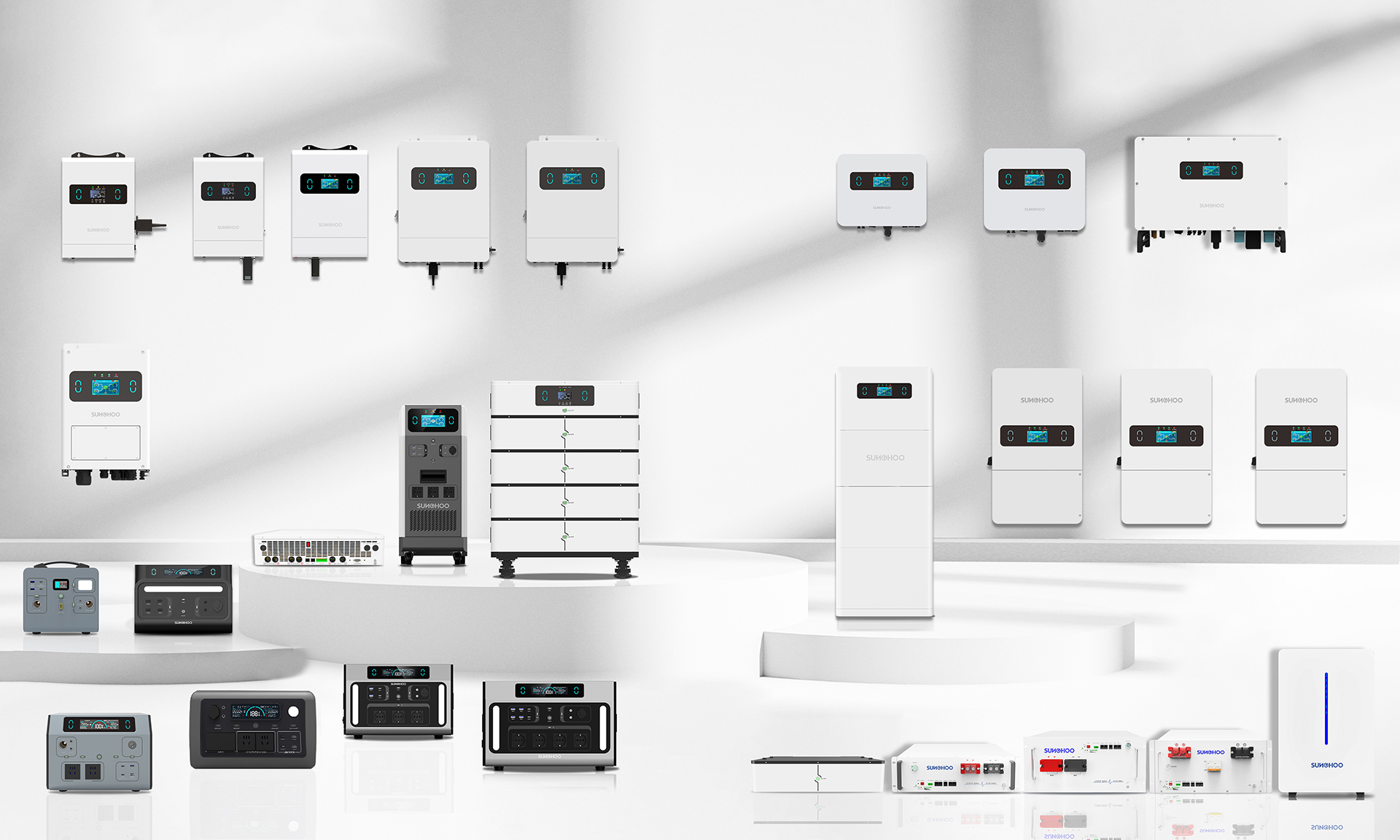
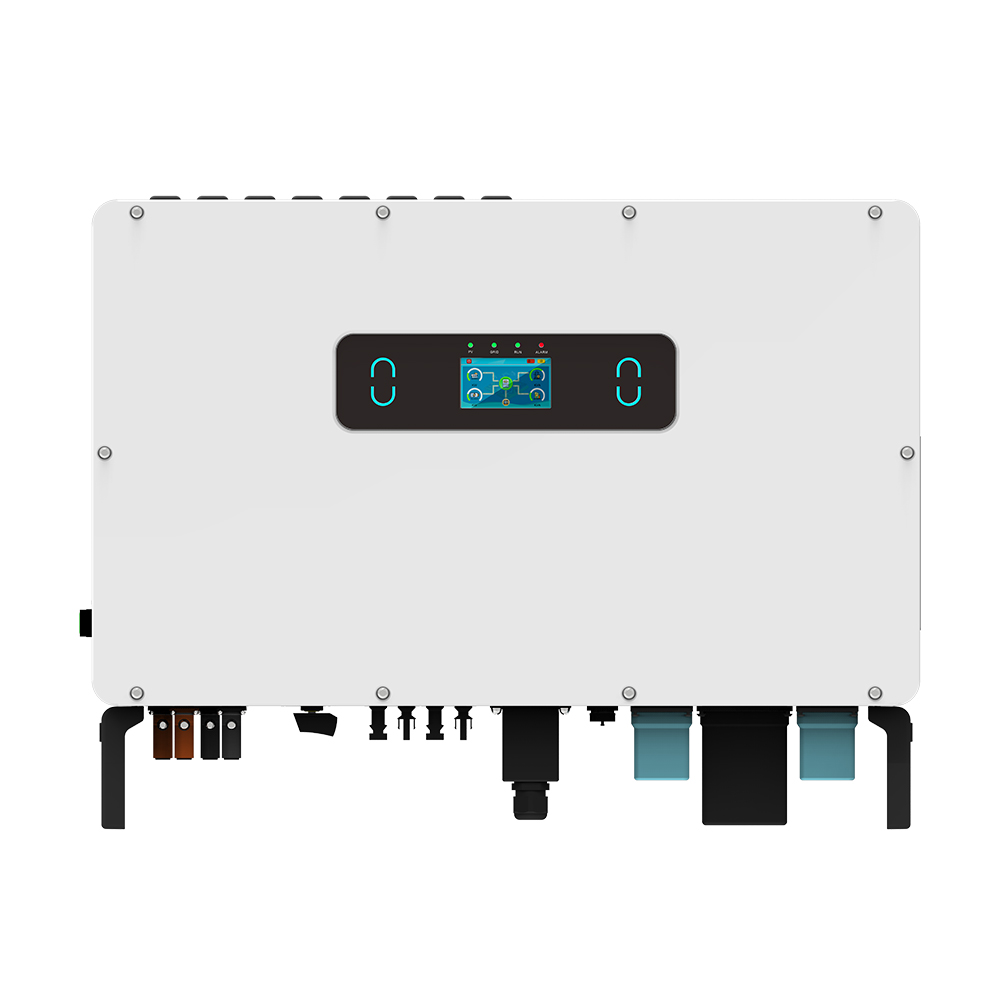
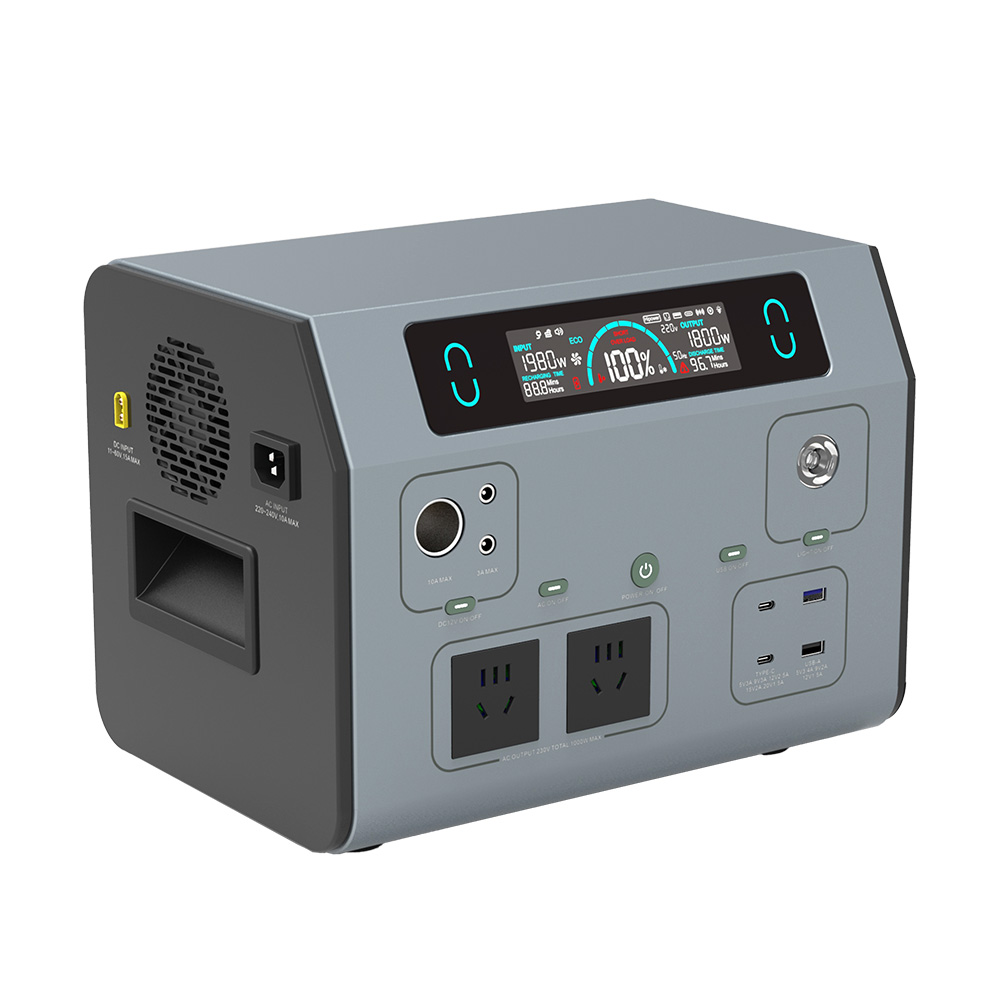
An Energy Storage System (ESS) is a system used to store electrical energy and release it when needed. Depending on the application requirements, an energy storage system can consist of batteries, a Battery Management System (BMS), an energy storage inverter (PCS), an Energy Storage System (EMS), and a monitoring system, and can be integrated with solar photovoltaic systems, the power grid, and loads.
Key Features of Our Energy Storage Systems
-
High Load Capacity & Reliable Operation: Both the battery and load sides support ultra-high load capacity with smooth waveforms, capable of driving inductive loads such as air conditioners; built-in output bypass function ensures continuous power supply to critical loads even without batteries.
-
Dual MPPT for Higher PV Utilization: Equipped with two MPPT channels, the PV input power can reach more than twice the rated power, supporting simultaneous full-power charging and load operation.
-
Flexible Multi-Mode Switching: Supports seamless switching between grid-connected, off-grid, and bypass modes, with adaptive frequency adjustment and customizable charging and discharging strategies based on time-of-use pricing, helping users save on electricity bills.
-
Comprehensive Safety Protection: Features complete anti-islanding protection, IP66 protection rating, PV reverse connection alarm, external CT reverse connection alarm, open circuit detection, three-phase independent reverse current protection, three-phase phase sequence detection, and zero-sequence grounding fault detection.
-
User-Friendly Design: High-definition multi-language touchscreen, three-stage charge/discharge conversion technology, supports customized AC output voltage standards, and equipped with battery soft-start, soft-shutdown, and battery activation functions.
How Does an Energy Storage System Work?
From sunlight to stored power to smart delivery — here's how a SUNOHOO energy storage system moves electricity from panel to plug.
01
Solar Energy Generation
Sunlight is converted into DC electricity by solar panels
02
Energy Storage Inverter
Converts DC power to usable AC, and manages energy flow direction
03
Energy Storage Battery
Stores surplus electricity for later use
04
Energy Management System
Monitors supply, demand and pricing to decide how power is routed
05
Home / Commercial / Industrial Loads
Power is delivered to appliances, equipment and machinery
06
Grid / Backup Power
Connects to the grid, or takes over automatically during an outage
When Does Each Step Kick In?
DURING THE DAY
Solar panels generate electricity, powering loads directly while the sun is out.
PRODUCTION > DEMAND
When energy production exceeds what's being used, the excess electricity is stored in the battery instead of going to waste.
AT NIGHT
With no sunlight to draw from, the stored energy in the battery supplies the loads instead.
DURING AN OUTAGE
If the grid goes down, the system automatically switches to backup power — no manual action needed.
GRID PRICES ARE HIGH
The battery discharges stored electricity to power the loads, reducing how much expensive grid electricity is consumed.
Energy Storage System Applications
From a weekend off the grid to a base station on a remote hillside — SUNOHOO systems are built to deliver power wherever the grid can't reach.
01
Outdoor & Travel
Portable power for camping, road trips and outdoor events — reliable electricity anywhere the journey takes you.
02
Off-Grid Household Use
Full independence from the utility grid, powering homes with stored solar energy day and night.
03
Nomadic Area
Compact, mobile energy storage for herding and nomadic communities living without fixed infrastructure.
04
Communication Base Station
Uninterrupted backup power for telecom towers and base stations in remote or unstable grid areas.
05
Insular Areas
Stable, self-sufficient power for islands where grid connections are costly, limited or unreliable.
06
Photovoltaic Transformation
Upgrading existing solar installations with storage — turning daytime generation into round-the-clock power.
Energy Storage System Safety
Every SUNOHOO system is engineered with 11 layers of protection — guarding the battery, the circuit and the people around it, around the clock.
01
Battery Protection
Continuous monitoring of cell health to prevent damage from abnormal conditions.
02
Over-Voltage Protection
Automatically cuts off charging when voltage exceeds a safe threshold.
03
Under-Voltage Protection
Stops discharge before voltage drops low enough to harm the battery.
04
Over-Current Protection
Limits current flow to protect internal components from excess load.
05
Short-Circuit Protection
Instantly isolates the circuit the moment a short circuit is detected.
06
Over-Temperature Protection
Pauses operation if internal temperature climbs beyond a safe range.
07
PV Reverse Connection Protection
Prevents damage if solar panel wiring polarity is connected incorrectly.
08
Overload Protection
Shuts down output safely when connected loads exceed rated capacity.
09
Anti-Reflux Protection
Blocks current from flowing backward into the grid or panels.
10
Thermal Management
Actively regulates temperature to keep performance stable in any climate.
11
BMS Protection
A dedicated Battery Management System oversees all protections in real time, cell by cell.
Why Choose SUNOHOO Energy Storage Systems?
A subsidiary of Zhejiang SUNOREN Solar Technology Co., Ltd. (Stock Code: 603105), SUNOHOO delivers green energy solutions with smart management — covering off-grid, hybrid, and portable energy storage systems, engineered in-house from R&D to production.
Certified to global standards
FCC · UKCA · CE · UL · UN38.3 · RoHS · SAA · MSDS
FCC
UKCA
CE
UL
UN38.3
RoHS
SAA
MSDS
Every SUNOHOO system is tested and verified against international compliance standards, from electrical safety to transport and material safety — so what leaves our factory is ready for the world.
Frequently Asked Questions
Answers to the questions we hear most often about choosing and customizing a SUNOHOO energy storage system.
What Type of Energy Storage System Is Suitable for Homes?
Most households do well with a hybrid energy storage system — it works with solar panels to store excess daytime generation and supplies the home at night or during an outage. For homes that are completely off the utility grid, an off-grid photovoltaic storage system is the better fit, since it's built to run entirely on solar and battery power. Household size, daily usage and whether the home is grid-connected all factor into the right capacity.
What Energy Storage System Is Suitable for Commercial Applications?
Commercial and industrial sites typically need larger-capacity hybrid systems designed for higher, steadier loads — offices, retail spaces, warehouses and factories all draw more continuous power than a household. These systems help commercial users shift usage away from peak electricity pricing, keep operations running through outages, and scale up in capacity as the business grows.
Can SUNOHOO Provide Customized Energy Storage Solutions?
Yes. SUNOHOO handles R&D, design, manufacturing and sales in-house, so systems can be tailored to a project's specific capacity, voltage, form factor and application — from residential and commercial installations to base stations and off-grid deployments. Our team works directly with customers to match the right configuration to the site's actual requirements.