index_product
INDUSTRIAL & COMMERCIAL ENERGY STORAGE
Power Conversion Systems for Large-Scale Storage

A power conversion system is the bidirectional converter that connects a battery bank to the grid — managing charge, discharge, and the switch between grid-tied and off-grid operation. Sunohoo PCS units scale from 50kW wall-mounted converters to 1500kW cabinet-scale systems.

Get a Custom Quote
Power Conversion Systems for Large-Scale Storage

What Is a Power Conversion System?

A power conversion system (PCS) is the bidirectional inverter that sits between a large-scale battery bank and the electrical grid. It converts DC battery power to AC for the grid or facility load when discharging, and converts AC to DC when charging the batteries — switching direction automatically as conditions demand.

Unlike a household hybrid inverter, a PCS is designed to be paired with an external battery system at industrial or commercial scale, and is typically installed alongside dedicated battery racks in a container or equipment room rather than as a single wall-mounted, all-in-one unit.

Peak Shaving in Action

Drag the grid import limit and watch the PCS flatten a building's demand curve — discharging during peak hours, recharging overnight.

350 kW
Hour 0 · load 120 kW · grid draw 120 kW · PCS idle
Original peak
--
Peak after PCS
--
Peak reduction
--
Energy shifted
--
Building demand curve with power conversion system peak shaving Bar chart of a 24-hour demand curve, colored by whether the PCS is charging, discharging, or idle, with a threshold line for the grid import limit. 0h 12h 23h
Grid draw PCS discharging PCS charging

PCS Core Features

Up to 99% Efficiency
Three-level topology across the FS and PCS series
Automatic Switching
Grid-tied and off-grid modes switch automatically, no manual intervention
IP65 Protection
C5 anti-corrosion rated for harsh outdoor environments
Multi-Unit Parallel
Support for multiple-machine parallel operation to scale capacity

Sunohoo Power Conversion System Range

Wall-mounted converters for distributed storage, cabinet-scale systems for utility and large commercial installations.

Wall-Mounted PCS

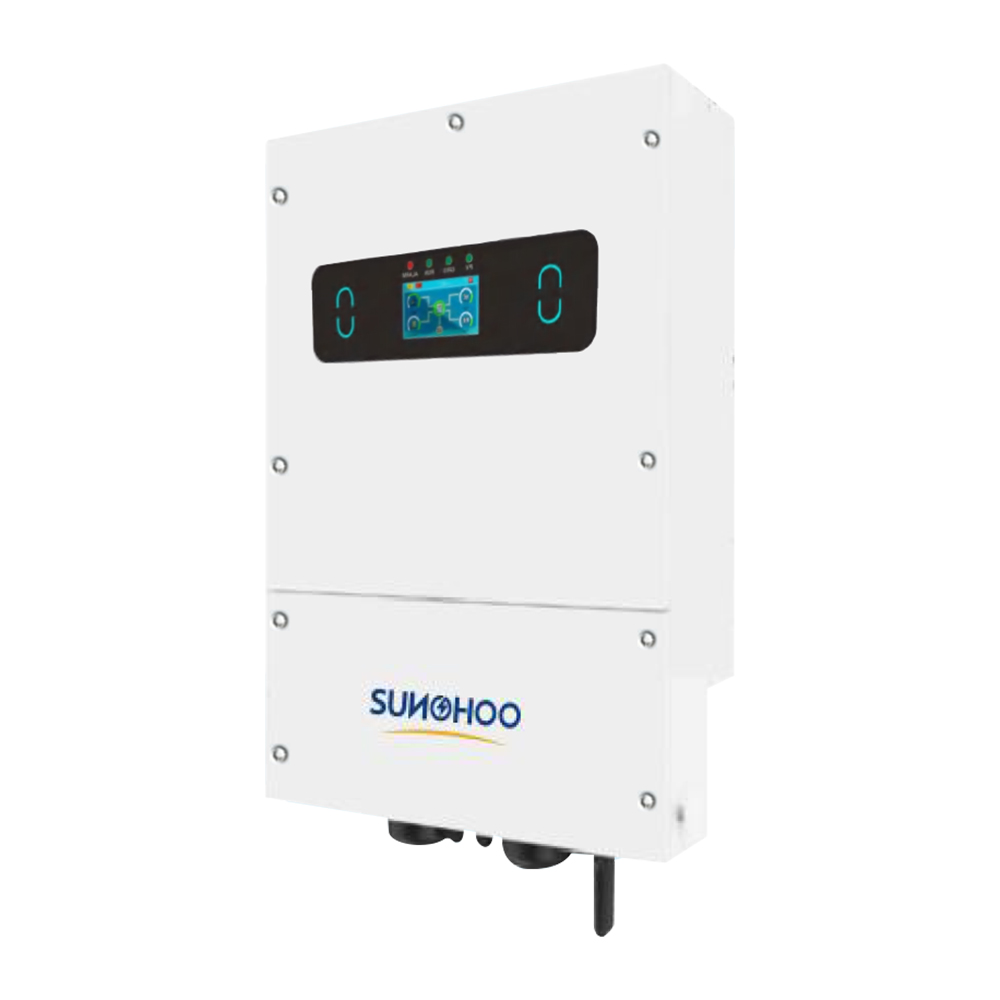
Wall-Mounted PCS — FS050CL09~FS100CL15&FS125CH15

  • 50kW–125kW rated output, up to 99% max efficiency

  • Three-level topology, 110% overload for long-term operation

  • DC voltage range up to 1500V, automatic grid-tied/off-grid switching

  • Wall-mounted, IP65, C5 anti-corrosion rating

  • LVRT/HVRT grid-fault ride-through, reactive power compensation

  • 75kg–100kg, RS485/CAN/Ethernet, Modbus-RTU/TCP

View Product

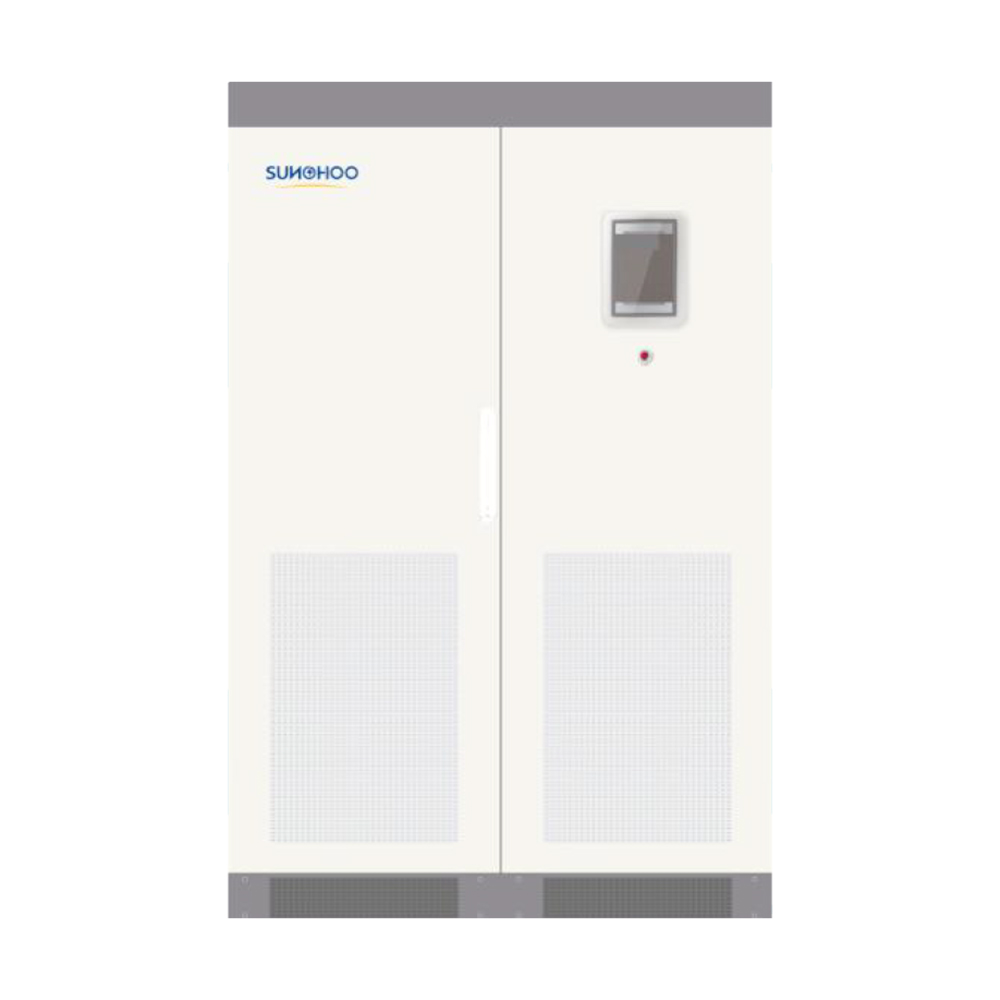
Cabinet-Scale PCS — PCS0250C10T~PCS1500C15H

  • 250kW–1500kW rated output across four models

  • Up to 99% max efficiency, DC voltage up to 1500V

  • 12 charge/discharge time period settings for tariff optimization

  • Switching time under 200ms, zero switching with optional SCR

  • Battery fully isolated from the grid, islanding detection

  • 1550kg–2150kg, touch screen display, RS485/CAN/Ethernet

View Product
Cabinet-Scale PCS

Which PCS Scale Fits Your Site?

Series Power Range Format Typical Site
FS Series 50kW–125kW Wall-mounted Distributed commercial storage, smaller facilities
PCS Series 250kW–1500kW Cabinet-scale Utility-scale storage, large industrial sites, microgrids

Power Conversion Systems in Use

Commercial Peak Shaving

Commercial Peak Shaving

A factory or office building discharges stored energy during peak-demand hours to avoid high demand charges from the utility.

Utility-Scale Storage

Utility-Scale Storage

The PCS series manages multi-megawatt battery banks feeding into the grid, with parallel operation across multiple cabinets.

Microgrid Backup

Microgrid Backup

Automatic grid-tied/off-grid switching keeps critical industrial loads running through utility outages.

Renewable Integration

Renewable Integration

Reactive power compensation and grid-fault ride-through keep large solar-plus-storage sites compliant with grid codes.

Power Conversion System — Frequently Asked Questions

Q: What's the difference between a PCS and a hybrid inverter?
A hybrid inverter is typically a smaller, all-in-one unit built for a single home with its own battery. A PCS is designed to be paired with a separate, much larger battery system — often container-scale — for commercial and industrial sites.
Q: What is peak shaving?
Peak shaving means discharging stored battery power during a facility's highest-demand hours so grid draw stays under a set limit, reducing demand charges that utilities bill based on peak usage.
Q: Do I need a separate battery system?
Yes. The PCS converts and manages power between the grid and battery, but the battery racks are a separate system, sized to the site's storage needs. See our energy storage battery range.
Q: How fast does the PCS switch to off-grid mode?
Switching is automatic. On the PCS series, parallel off-grid switching is typically under 200ms, and can reach zero switching time with an optional SCR configuration.
Q: Can multiple PCS units work together?
Yes, both the FS and PCS series support multiple-machine parallel operation, letting you scale total power capacity by adding units.
Q: Can Sunohoo customize a PCS for OEM or project-scale orders?
Yes. As a manufacturer, Sunohoo works with integrators and project developers on OEM/ODM PCS orders. Contact us with your target specification and scale for a quote.