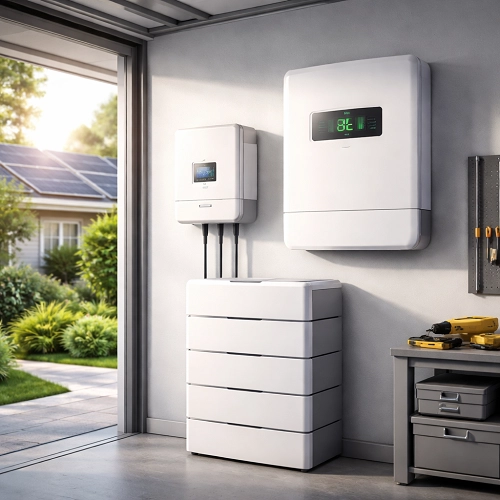
Household energy storage systems (HESS) are rapidly transforming how we use, manage, and think about energy at the residential scale. With the rise of renewable energy generation, increasing electricity costs, grid instability, and a growing focus on sustainability, energy storage is becoming an essential part of modern homes.
1. Introduction to Household Energy Storage
Household energy storage systems are technologies designed to store electrical energy generated from both the grid and on-site renewable sources, like solar photovoltaic (PV) panels, for later use. Rather than consuming electricity immediately as it’s generated or received, HESS allows homeowners to save excess energy for use during peak demand periods, outages, or times when renewable production is low (e.g., nighttime for solar).
These systems are analogous to a home battery bank that stores energy for future needs, and they are increasingly a focal point in the shift toward decentralized and more resilient energy systems.
2. Why Household Energy Storage Matters
The growing emphasis on renewable energy sources like solar and wind—which are variable and dependent on environmental conditions—has amplified the need for reliable storage. Energy storage addresses fundamental limitations of renewables:
-
Intermittency: Solar only produces power with sunlight; wind turbines need wind.
-
Timing mismatch: Energy demand and renewable generation do not always align.
-
Grid Constraints: Electricity pricing and grid capacity fluctuate over time.
By balancing supply and demand through storage, households can maximize self-consumption, reduce reliance on the grid, and contribute to overall energy system stability.
3. Key Technologies in Household Energy Storage
Lithium-Ion Batteries
Lithium-ion (Li-ion) batteries are currently the dominant technology in residential energy storage:
-
High energy density: Offers more storage capacity per unit size and weight.
-
Long cycle life: Typically capable of several thousand charge/discharge cycles.
-
High efficiency: Round-trip efficiency (energy returned versus energy stored) often exceeds 90%.
Li-ion chemistries used include:
-
Lithium Nickel Manganese Cobalt Oxide (NMC)
-
Lithium Iron Phosphate (LFP)—notable for safety and longevity
Pros: Compact size, good performance, decreasing costs
Cons: Degradation over time, safety concerns if improperly managed
Lead-Acid Batteries
Traditional lead-acid batteries have served off-grid storage needs for decades:
-
Lower upfront cost
-
Mature technology
However:
-
Lower energy density
-
Shorter cycle life
-
Maintenance requirements
Lead-acid systems are less common in modern residential systems but remain an option for budget-conscious installations.
Flow Batteries
Flow batteries store energy in liquid electrolytes held in external tanks:
-
Long cycle life
-
Scalable capacity (by increasing tank size)
-
Enhanced safety
Examples include vanadium redox flow batteries.
Challenges: Higher complexity, greater footprint, relatively higher initial cost.
Other Emerging Technologies
Other technologies gaining interest include:
-
Sodium-ion batteries: Lower-cost alternative with improving performance
-
Solid-state batteries: Promising higher energy density and safety
-
Hydrogen storage with fuel cells: Potential for long-duration storage
4. How Household Energy Storage Systems Work
Basic Components and Architecture
A typical HESS includes:
-
Battery modules: The core storage units
-
Battery management system (BMS): Monitors state of charge (SoC), temperature, and health
-
Inverter/charger: Converts DC (battery) ↔ AC (home/grid)
-
Energy management software: Controls charging, discharging, and load priorities
Charge and Discharge Cycles
-
Charging: Energy is stored during periods of excess generation (e.g., midday solar peak).
-
Discharging: Stored energy is used when demand is high, solar production is low, or during outages.
The BMS ensures safe operation, prevents overcharge/overdischarge, and balances cells.
Integration with Solar PV and the Grid
HESS can be configured to work in different modes:
-
Grid-tied with storage: Stores grid energy when electricity is cheap and supplies home during peak pricing.
-
Solar-coupled: Prioritizes solar generation into the battery.
-
Hybrid systems: Seamlessly manage solar, storage, and grid interaction.
Advanced systems also support time-of-use (TOU) pricing optimization.
5. Sizing and Capacity Considerations
Sizing a HESS depends on:
-
Energy needs: Daily kWh usage vs. backup requirements
-
Solar generation capacity
-
Budget
-
Desired autonomy (hours/days off-grid)
Battery size is measured in kilowatt-hours (kWh), while power capacity is in kilowatts (kW)—indicating how much load can be supplied at any moment.
6. Benefits of Household Energy Storage Systems
Energy Independence
Homeowners gain more control over energy use, reducing reliance on utility grids.
Cost Savings and Peak Shaving
By storing energy during low-price periods and using it when rates are high, homeowners can minimize electricity bills.
Grid Resilience and Backup Power
During grid outages, a properly sized HESS can:
-
Power essential loads
-
Provide blackout protection
-
Enhance reliability for critical devices
Environmental Benefits
Maximizing self-consumption of solar energy reduces:
-
Carbon emissions
-
Dependence on fossil-fuel-based peak plants
7. Challenges and Limitations
Despite benefits, HESS adoption faces barriers:
-
Upfront Costs: Even with declining prices, battery systems represent a significant investment.
-
Lifespan and Degradation: Batteries degrade over time, impacting long-term value.
-
Permitting and Regulations: Local codes and utility policies vary widely.
-
Recycling and End-of-Life: Responsible disposal and recycling remain areas needing improvement.
8. Economic and Policy Considerations
Incentives and Rebates
Many governments and utilities offer:
-
Tax credits
-
Rebates
-
Net metering and export tariffs
Policies significantly affect payback periods.
Return on Investment (ROI)
ROI depends on:
-
Electricity tariffs
-
Solar generation
-
Usage patterns
Tools and calculators help estimate financial outcomes.
9. Installation, Safety, and Maintenance
Installation Best Practices
Qualified installers should:
-
Assess electrical infrastructure
-
Ensure proper ventilation and cooling
-
Follow manufacturer guidelines
Safety Considerations
Key safety aspects:
-
Adequate fire suppression systems
-
Proper electrical protection (fuses, disconnects)
-
Temperature monitoring
Maintenance
Routine checks ensure:
-
BMS performance
-
No physical damage
-
Healthy charge/discharge cycles
10. Future Trends and Innovations
Emerging trends include:
-
Vehicle-to-Home (V2H): Using electric vehicle batteries as storage assets
-
Artificial Intelligence (AI) Energy Management
-
Community energy storage networks
-
Advanced chemistries (solid-state, sodium-ion)
Grid-edge innovations will further integrate homes into smart energy ecosystems.
Household energy storage systems are at the forefront of transforming residential energy usage. They empower homeowners with energy independence, cost control, and sustainability, while enabling deeper integration of renewable energy sources. Continued advancements in technology, coupled with supportive policies and market evolution, will make HESS a cornerstone of future energy systems.